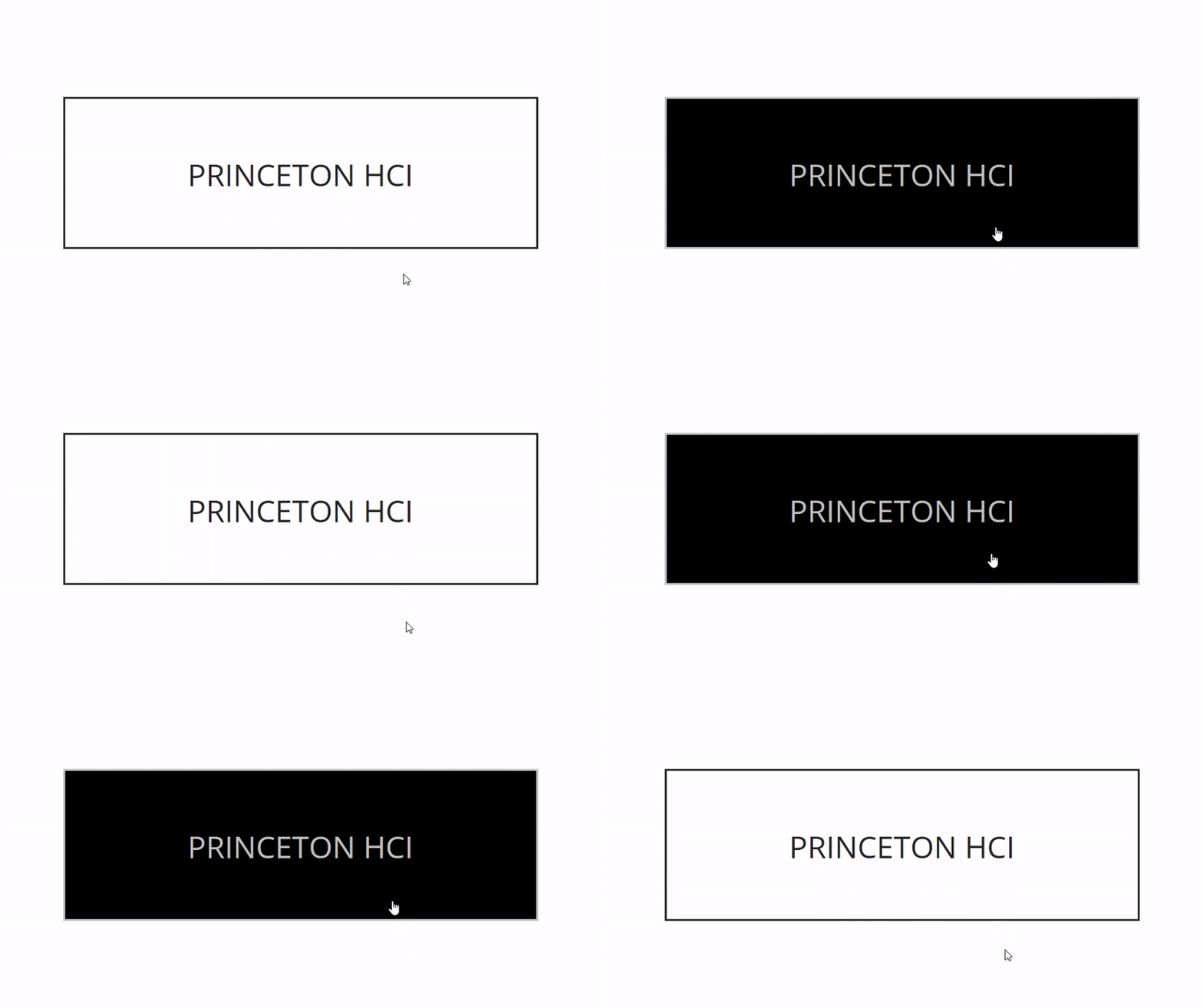
Mouse Cursors for PC
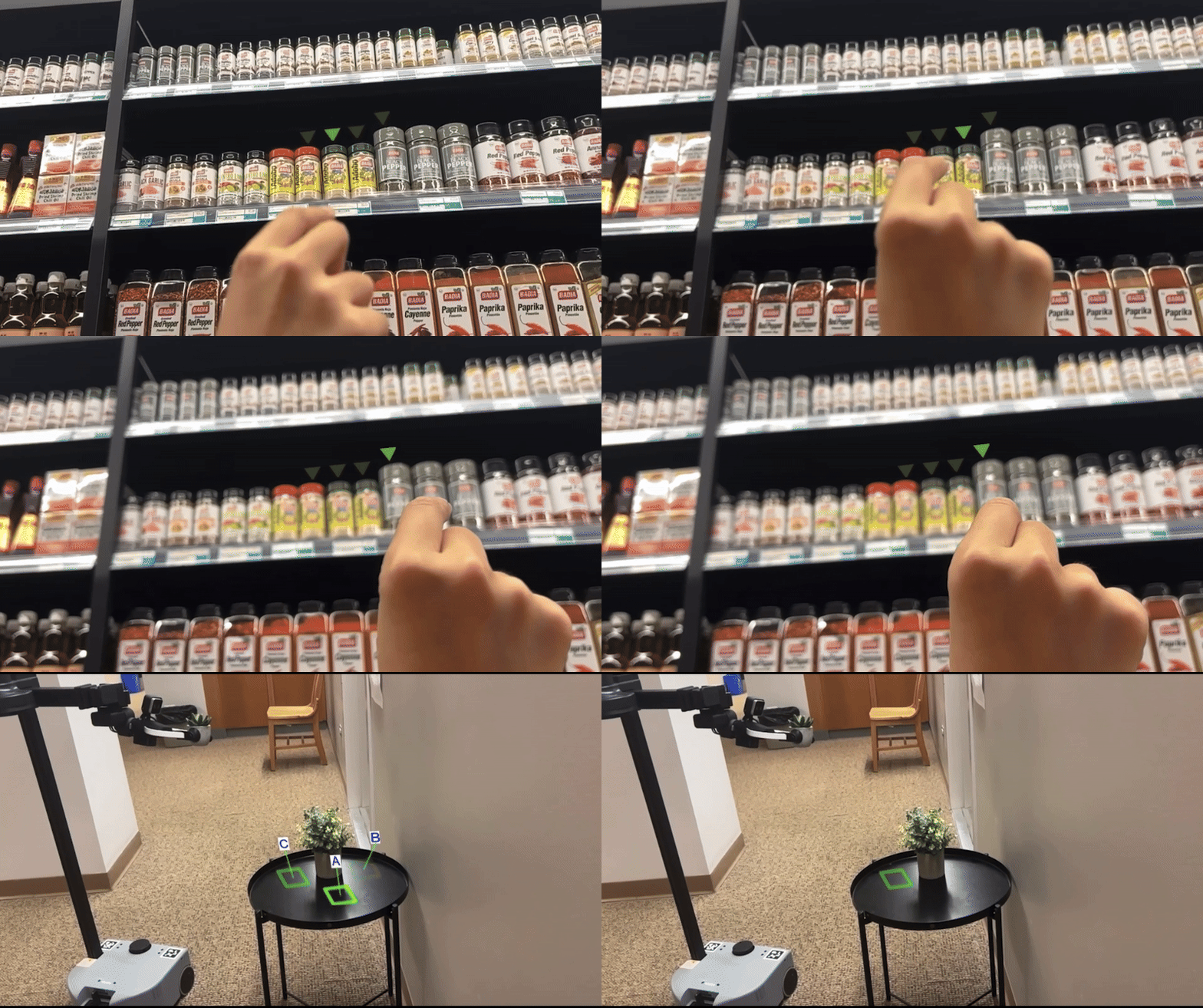
Uncertain Pointers for AR
Intro
As AI agents enter the physical world via smart glasses and robots, they need to interpret users’ ambiguous references, including imprecise pointing and underspecified language like “what’s that?” in complex real-world settings.
Interaction breakdowns occur when uncertainty is high, and errors are likely.
We introduce Uncertain Pointer to communicate system uncertainty with AR visualizations and facilitate user disambiguation!
From single-target cursors to multi-target feedforwards
A cursor is clear and useful for highlighting a "single" 2D object, and it has been explored through many iterations — from dots to arrows to tilted arrows (see James and Alan Kay’s email for example) — to provide feedforward about where a click will land. But what if the system can’t reliably tell which target the user intends to select? When input is uncertain, as in noisy, everyday real-world AR, what visual feedforward should we use? In this work, we explore Uncertain Pointers that support diambiguation by annotating "multiple" real-world targets.
Uncertain Pointer Design
Level Pointer
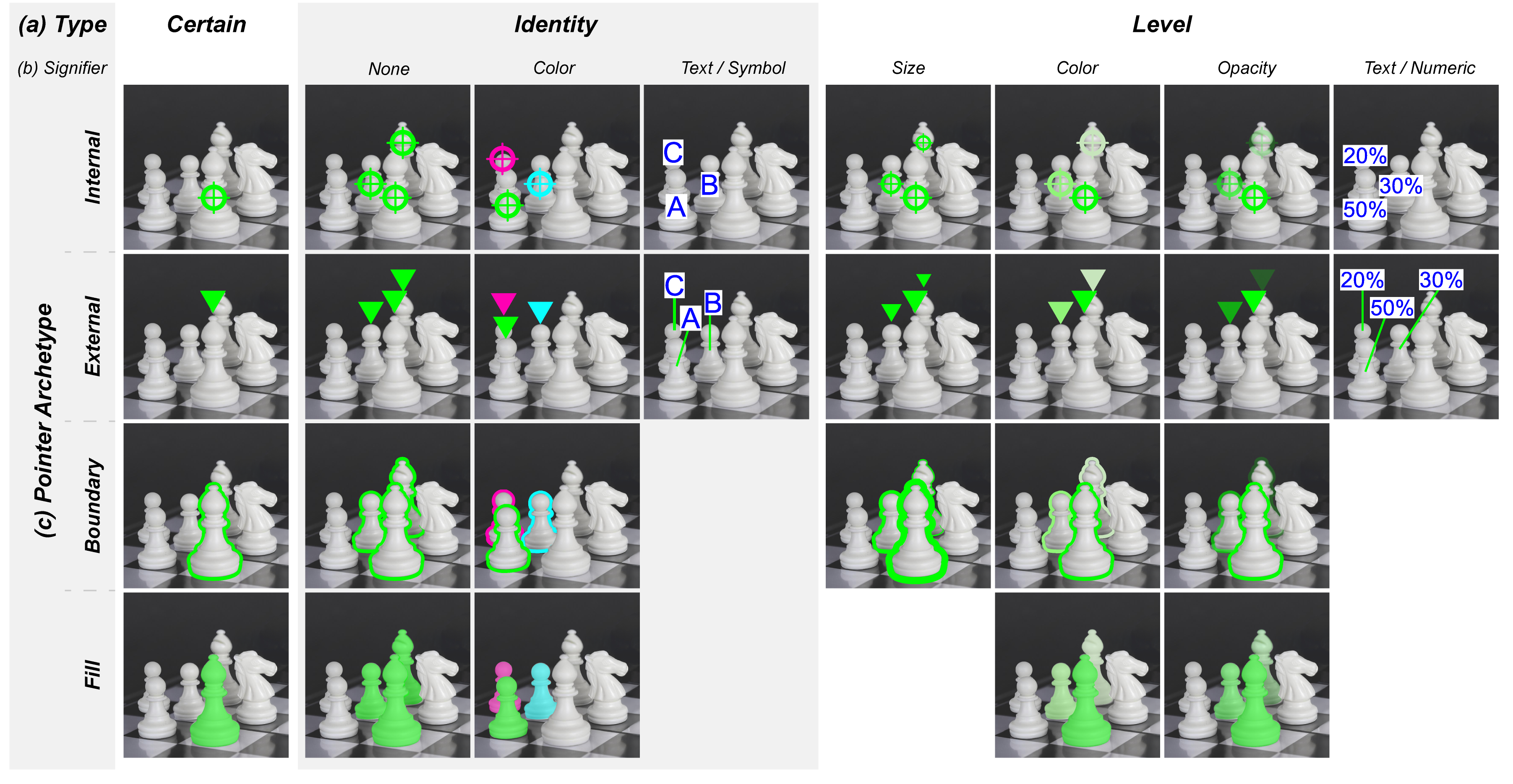
Our level visualizations modulate pointer intensity (e.g., size, opacity) to reveal the system’s interpretation.
Identity Pointer
Our identity visualizations add descriptive attributes (e.g., color, letters) to support verbal disambiguation.
Pointer Archetypes + Uncertainty Viusalizations = Uncertain Pointers
Our key idea in exploring Uncertain Pointers is to combine established pointer designs with visual signifiers commonly used for uncertainty visualization. We systematically surveyed 30 years of ACM CHI, UIST, DIS, VRST, SUI, and AutomotiveUI, as well as IEEE TVCG, ISMAR, 3DUI, and VR. We summarized four pointer archetypes: internal, external, boundary, and fill and found the most prevalent uncertainty signifiers: size, color, opacity, and text/numeric/symbol.
Evaluations across Different Target Complexities
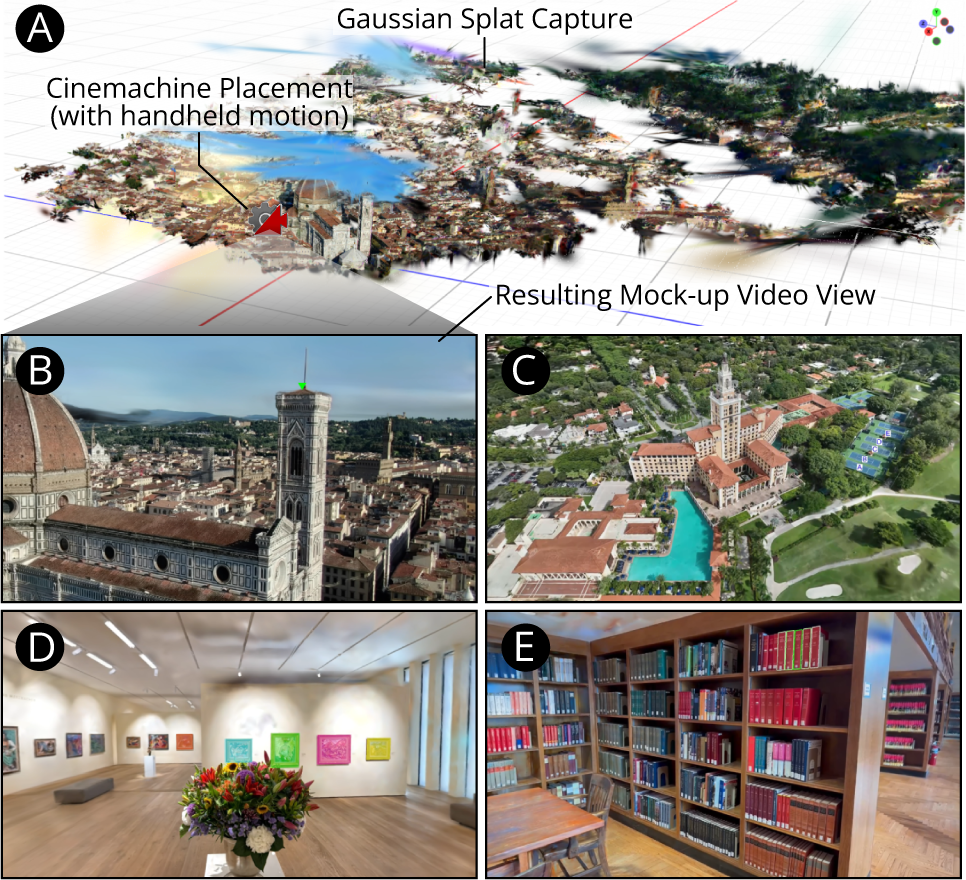
We conducted two pre-registered online studies with 100 participants using photorealistic scenes with Gaussian splats to simulate different target complexities (near vs. far, sparse vs. densely-packed) and measured pointer identifiability and target visibility, along with subjective metrics such as user preference and perceived mental effort, etc.
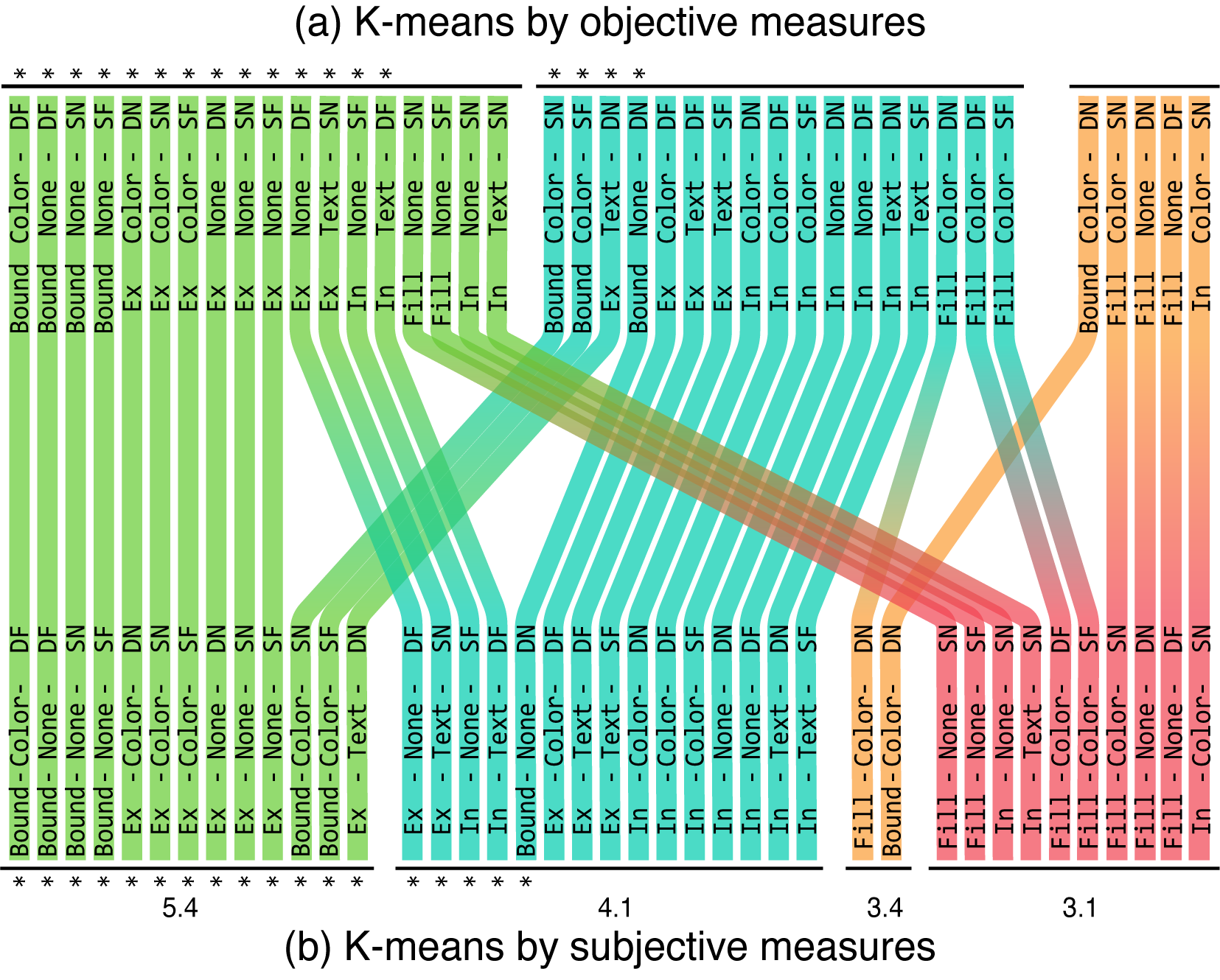
We apply data analysis such as clustering to understand the trade-off and effectiveness of different Uncertain Pointers, distilling design recommendations.
Additional Applications
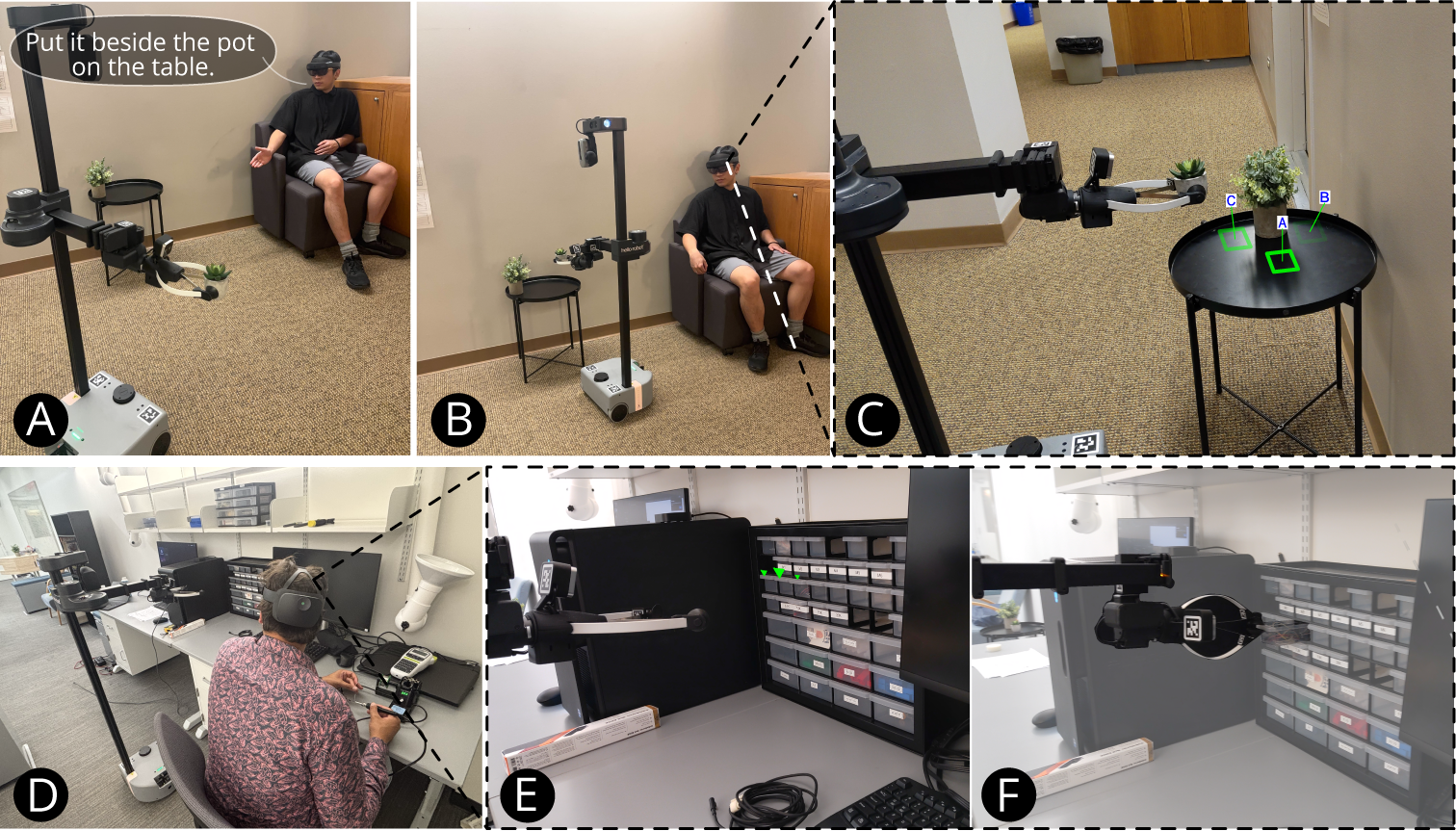
We demonstrate Uncertain Pointers in human-robot interaction: (A–C) show a robot placing objects with linguistic ambiguity resolved via boundary pointers with text labels, and (D–F) show gaze-based tool fetching where level pointers provide feedforward for intent clarification.